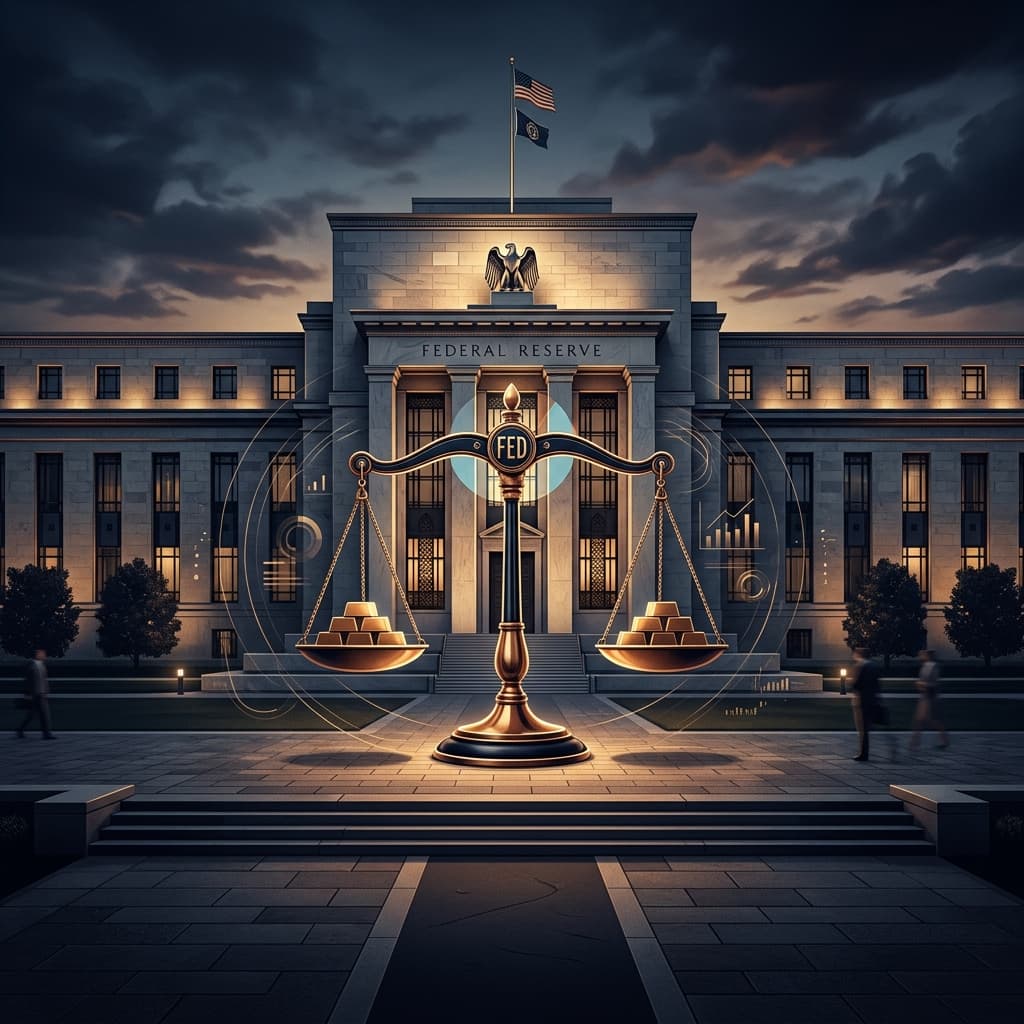
The Fed Held Again, But Three Officials Voted to Raise. Everyone Was Watching the Wrong Direction
The July 29 decision was a fifth straight hold, but the vote was 9-3 and all three dissenters wanted a hike. That's the most hawkish FOMC split since 2016, and it changes what you should do with savings and debt.
The Federal Open Market Committee held its benchmark rate at 3.50%-3.75% on July 29. That was the expected outcome, and on the surface it looked like more of the same - a fifth consecutive meeting without a move.
The vote tells a different story. It was 9 to 3, and all three dissenters wanted to raise rates by a quarter point.
Beth Hammack of Cleveland, Neel Kashkari of Minneapolis, and Lorie Logan of Dallas broke with the majority in favor of a hike. It is the first time since September 2016 that three policymakers have dissented in the same direction, and Kashkari joining them caught markets off guard.
For most of this year the household question has been "when will the Fed cut?" That question now has a competitor: what if the next move is up?
Key Takeaways
- ✓The Fed held at 3.50%-3.75% for a fifth straight meeting, but the 9-3 vote was the most hawkish split since 2016.
- ✓All three dissenters - Hammack, Kashkari, and Logan - wanted a quarter-point increase, not a cut.
- ✓Inflation has now run above the Fed's 2% target for more than five years, which is the dissenters' core argument.
- ✓July payrolls actually fell by 23,000 with unemployment at 4.1%, so the Fed is caught between a softening job market and stubborn inflation.
- ✓If a hike is genuinely on the table, locking savings into long CDs becomes less attractive and paying off variable-rate debt becomes more urgent.
What Actually Happened
The headline decision was a hold. The composition of the vote is the news.
| July 29, 2026 FOMC | |
|---|---|
| Decision | Hold at 3.50%-3.75% |
| Vote | 9-3 |
| Dissenters | Hammack (Cleveland), Kashkari (Minneapolis), Logan (Dallas) |
| Dissent direction | In favor of a 0.25 point increase |
| Consecutive holds | Five |
Dissents happen. Three dissents pointing the same way do not - the last time was September 2016. And the direction matters more than the count: these officials were not arguing that the Fed is too slow to ease. They were arguing it is too slow to tighten.
The dissenters' case is straightforward. Inflation has been above the Fed's 2% target for more than five years. Holding rates steady while inflation runs persistently hot risks letting elevated inflation become normal - the thing central banks fear most, because unwinding entrenched expectations is far more painful than preventing them.
Officials' own year-end projections now span roughly 3.6% to 4.1%. The top of that range is above where rates sit today. A year-end forecast that includes higher rates is not a forecast of cuts.
The Bind the Fed Is In
Here is what makes this genuinely difficult rather than simply hawkish.
Inflation argues for higher rates. Core inflation has stayed above target, and the June CPI showed prices still up 3.5% from a year earlier. Energy markets have added pressure, with oil spiking in the second half of July on renewed tensions involving Iran.
The labor market argues for lower ones. The July employment report showed payrolls falling by 23,000, with unemployment at 4.1%. That follows a June that added only 57,000 jobs against expectations near 115,000, and downward revisions before that. Hiring is not merely slowing; in July it reversed.
Those two facts point in opposite directions with unusual force. Raise rates to fight inflation and you press harder on an already-contracting job market. Cut to support employment and you risk entrenching inflation that has already outstayed its welcome by five years.
The majority chose to wait. Three officials thought waiting was itself the risk.
What this means for you is simpler than it is for them: stop planning around a rate cut. It has been a losing assumption for seven months, and the July vote makes it a weaker assumption than it was in June.
What Changes for Your Savings
This is where the hawkish surprise actually shifts the practical advice, and it runs opposite to what I would have told you a month ago.
The case for locking long just got weaker.
When cuts look imminent, the smart move with cash you won't need soon is to lock a rate - a 12-month CD, a longer Treasury bill - so a falling market can't reach you. That logic assumes rates fall from here.
If there is a live possibility that rates go up, locking a long fixed rate today means potentially sitting in a below-market yield while new accounts pay more. The asymmetry has narrowed.
A reasonable adjustment:
- Keep your emergency fund liquid, as always. That was never a rate call.
- Favor shorter terms for money with a horizon - 3 to 6 month Treasury bills or short CDs rather than 12 to 24 month commitments - so you can reprice if the Fed does move up.
- Do not chase a long CD purely out of fear of cuts that have not arrived and that three FOMC members are actively arguing against.
Top savings yields have been running near 4.01%-4.15%, against a national average around 0.38%. That gap - roughly eleven times - remains the largest easy return available on cash, and it does not depend on predicting the Fed at all. If your savings still sits at a big bank earning near the national average, that is the move that matters, not the CD-versus-savings question.
Our guide to where to keep cash covers matching money to the right account by time horizon, and our free after-tax yield calculator shows what each option actually nets you after federal and state tax - which frequently changes the ranking.
What Changes for Your Debt
Here the message gets sharper, not softer.
Credit card APRs are set as the prime rate plus a margin, and prime tracks the federal funds rate directly. For seven months, "wait for rates to fall" has meant paying roughly 22% APR while waiting. If the next move is up rather than down, waiting gets actively more expensive.
Anyone carrying a variable-rate balance should treat the July vote as a deadline rather than a data point:
- Credit cards at around 22% APR. A guaranteed 22% return on every dollar you pay down. Nothing in this article competes with that.
- HELOCs and variable-rate personal loans. These reprice upward quickly if the Fed moves. If you have been carrying one comfortably, model what it costs a quarter point higher.
- Anything above roughly 7% APR belongs ahead of extra savings contributions.
Our payoff guide covers the avalanche and snowball methods, and our household debt warning signs piece covers reading credit conditions before they reach you.
The one group this genuinely helps: anyone with a fixed-rate mortgage or fixed-rate loan. You are insulated. That is the entire value of a fixed rate, and it is worth remembering when rate news feels alarming.
What to Watch Next
Three things will decide whether September brings a hike, another hold, or an eventual cut.
July CPI, due August 12. The first inflation reading since the July meeting, and the first to capture the late-July oil move. A hot number strengthens the dissenters considerably.
The August employment report. July's decline of 23,000 was the weakest reading in this cycle. A second negative month would make hiking politically and economically much harder regardless of inflation.
Whether the dissent grows. Three dissenters is notable. Four or five would signal that the hawkish position is becoming the majority rather than a protest.
For how to read those releases yourself rather than relying on headlines, see our guides to reading inflation data and reading the job market.
Frequently Asked Questions
Did the Fed raise rates in July 2026?
No. The FOMC held its target range at 3.50%-3.75% on July 29, the fifth consecutive meeting without a change. However, the vote was 9-3, with three officials dissenting in favor of a quarter-point increase.
Why is a 9-3 vote significant?
Dissents are common, but three officials dissenting in the same direction is rare - the last instance was September 2016. It signals that support for the current policy stance is thinner than a unanimous hold would suggest, and that the internal debate has shifted toward tightening rather than easing.
Should I still open a CD to lock in today's rates?
It depends on your horizon, and the case is weaker than it was. Locking a long fixed rate protects you if rates fall but leaves you below market if they rise. With a genuine possibility of an increase, shorter terms - 3 to 6 months - preserve flexibility. Your emergency fund should stay in a liquid savings account regardless.
What happens to my mortgage if the Fed raises rates?
If you have a fixed-rate mortgage, nothing. Your rate and payment are locked for the life of the loan. If you have an adjustable-rate mortgage or a HELOC, those can reprice upward. Note that new mortgage rates track the 10-year Treasury yield rather than the federal funds rate directly, so they do not move in lockstep with Fed decisions.
Does a weak jobs report mean the Fed will cut instead?
Not necessarily. July payrolls fell by 23,000, which is a genuine argument for easing. But inflation has run above target for more than five years, which is the argument against. The committee has so far resolved that tension by holding. Whether weak employment or persistent inflation wins out is precisely what the next two data releases will determine.
Rate and vote details come from the Federal Reserve's July 29, 2026 FOMC statement, available at federalreserve.gov. Employment and inflation figures come from the Bureau of Labor Statistics. This article is informational and is not individualized financial advice.
Financial Disclaimer: This article is for informational purposes only and does not constitute financial advice. Always consult a licensed financial advisor before making financial decisions.

Founder & Editor
Francis founded WealthWire Daily to explain US personal finance using primary sources. He is not a licensed financial advisor.
Discussion & Comments
You Might Also Like
The Fed Meets July 29 With Rates Frozen All Year. What a Fifth Straight Hold Means for Your Money
The Federal Reserve is expected to leave rates at 3.50%-3.75% on July 29, the fifth consecutive hold of 2026. That freeze is quietly costing borrowers and rewarding savers who act on it.
WealthWire Savings Rate Tracker: July 2026 (Top Yields Near 4.15%)
The first edition of our monthly savings rate tracker. Top high-yield accounts are paying around 4.15% APY against a national average of 0.38% - a gap of roughly eleven times, and it's narrowing.

The 2027 Social Security COLA Is Tracking Near 3.8%. Here's What It Adds to Your Check
Independent forecasters now put the 2027 cost-of-living adjustment between 3.7% and 3.8%, up sharply from this year's 2.8%. The official number lands October 14, and Medicare will take a bite first.